
CASE STUDIES
Six systems, start to finish.
The challenge, the framework behind it, what I built, and the results. Work samples are shared with organization details removed.
CASE STUDY 1 OF 6 · NATIONAL NONPROFIT · 2025–2026
Performance management
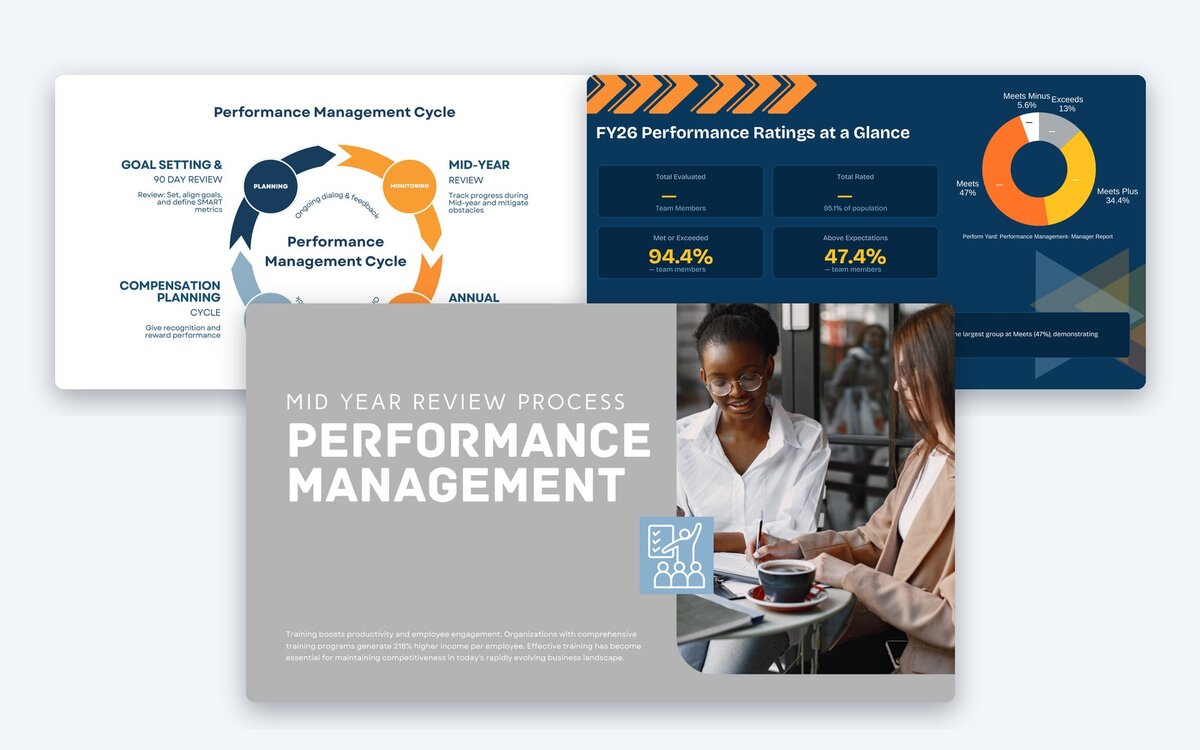
Cycle design and platform implementation supporting 1,000+ employees: goal setting cascaded from the strategic plan, manager training, mid-year and year-end reviews, and calibration.
FRAMEWORK APPLIED
The Clarity Chain
Strategy to goals. Team and individual goals cascaded directly from the strategic plan, written in SMART form.
Goals to behavior. A ratings scale that defines observable performance at each level, from Exceeds to Below Plan.
Behavior to evidence. Calibration checked that ratings meant the same thing across departments.
THE CHALLENGE
Goals weren't consistently tied to the strategic plan, reviews were uneven from department to department, and managers had little guidance on writing measurable goals or rating performance. A new performance platform was rolling out at the same time, so the process and the tool had to land together.
WHAT I BUILT
SMART goal-setting training and a goal cascade from the strategic plan
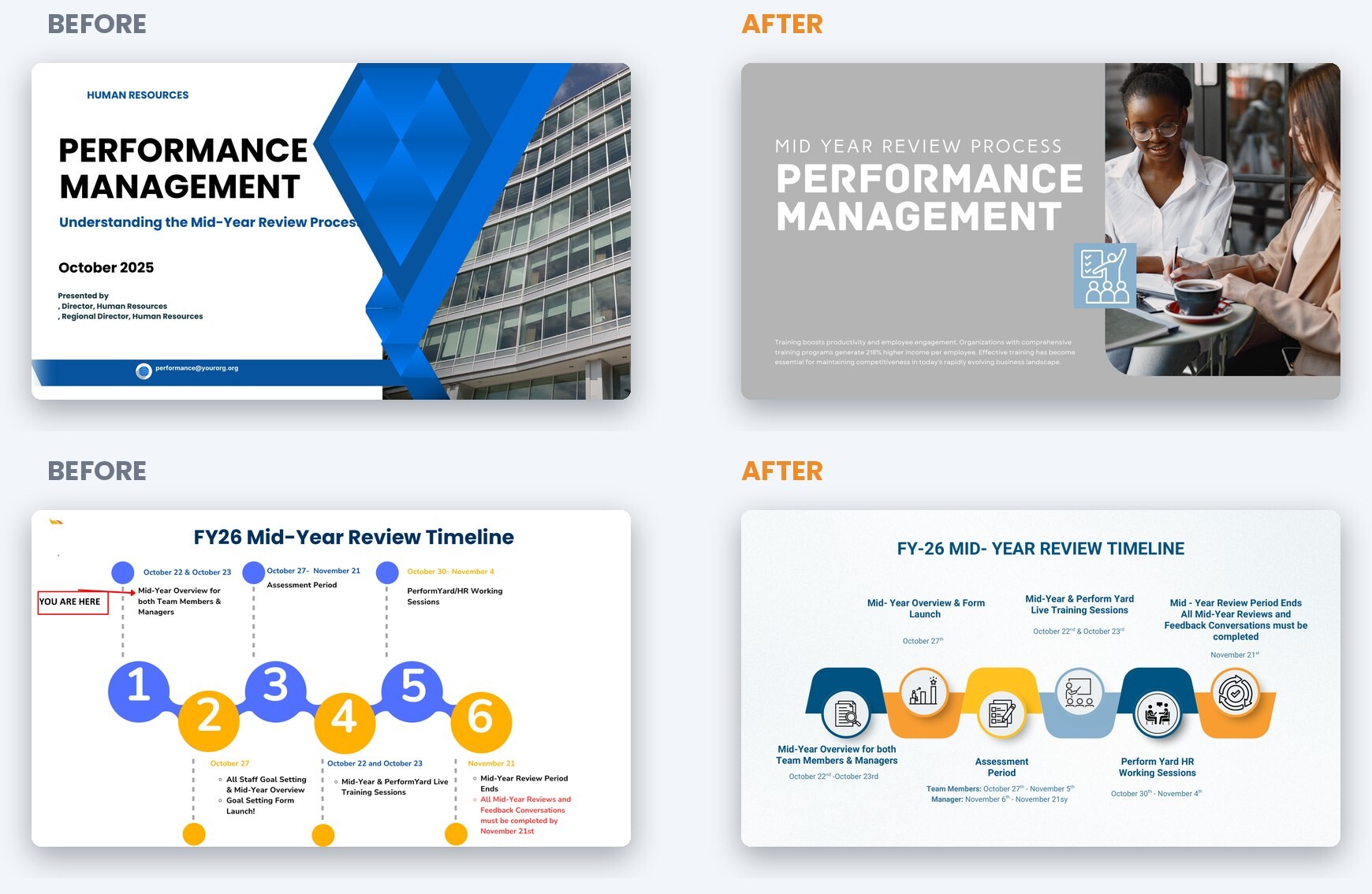
A redesigned mid-year review training
Year-end training for managers and for team members
A performance calibration assessment
Communications for a 360 manager feedback launch
OUTCOMES
68% → 85% performance cycle completion
305 employees across 14 departments reached through three goal-setting workshops
95.1% of the eligible population rated in the first calibrated cycle
All four rating levels used, showing managers rated differently instead of giving everyone high scores
before and after
WORK SAMPLES
SMART Goal Setting Training
Year-End Trainings: Managers
Performance Calibration Assessment
Mid-Year Review Training
Year-End Trainings: Team Member (employee)
360 Feedback Communications Plan
←BACK TO ALL CASE STUDIES
CASE STUDY 1 OF 6 · NATIONAL NONPROFIT · 2025–2026
Competency & career framework
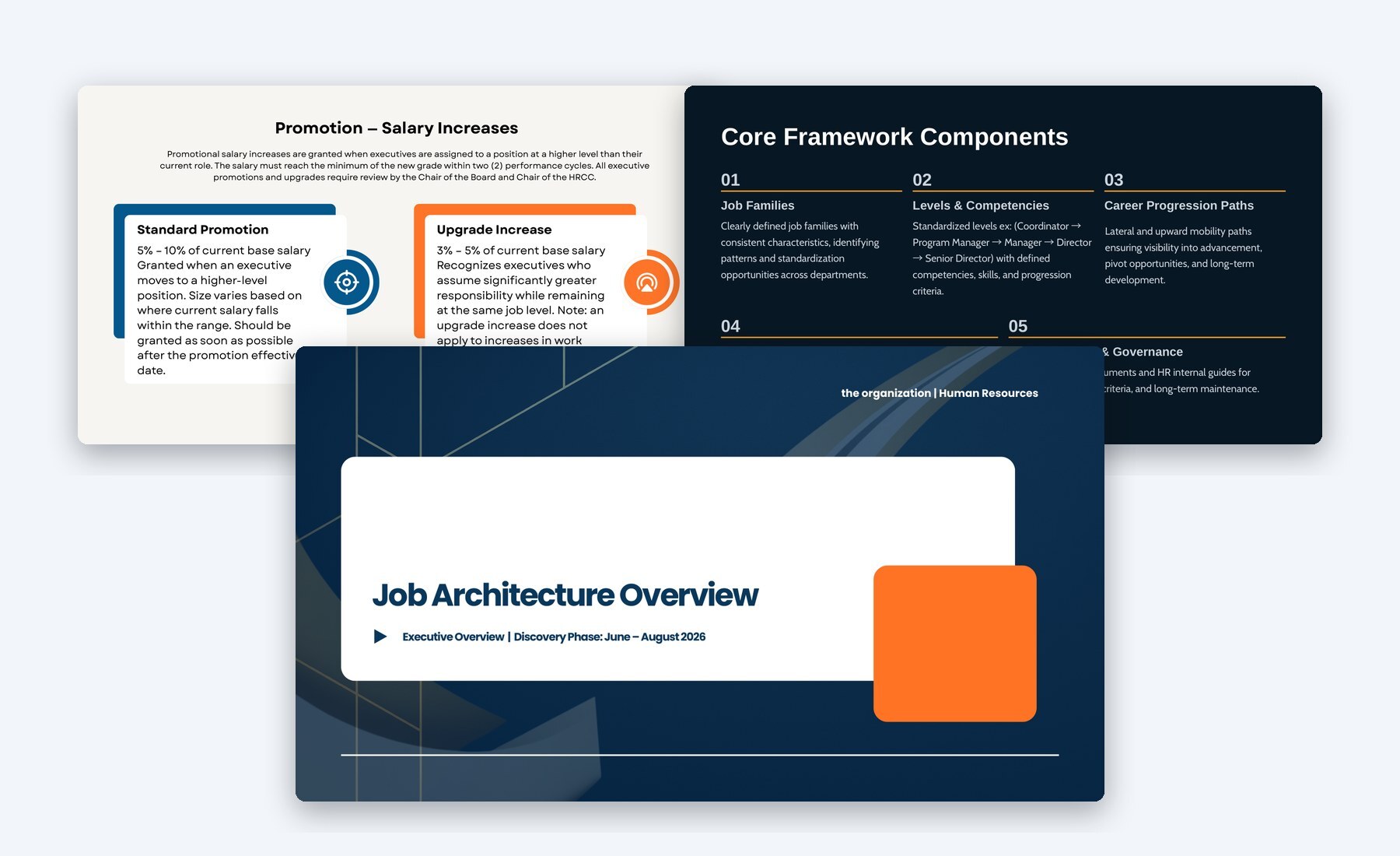
Organization-wide job architecture defining job families, career levels, and promotion rubrics, with a governance model for senior leadership and an executive compensation program.
FRAMEWORK APPLIED
The Clarity Chain
Strategy to structure. Job families organized around the work the strategic plan requires.
Structure to levels. Career levels with distinct scope and expectations at each step.
Levels to behavior. Promotion rubrics that describe observable readiness, not tenure.
Behavior to evidence. Calibration checked that ratings meant the same thing across departments.
THE CHALLENGE
270+ unique job titles with no shared structure across departments.
Promotion decisions relied heavily on individual judgment, with no common rubric.
No consistent way to compare roles, levels, or pay across the organization.
Promotion rubrics and a governance model for senior leadership
Executive compensation and benefits needed a clear, defensible philosophy.
WHAT I BUILT
A job architecture initiative overview and roadmap
An executive proposal comparing consulting partners
A facilitation guide for job family design workshops
Promotion rubrics and a governance model for senior leadership
An executive compensation program and a redesigned executive benefits plan
OUTCOMES
270+ job titles → 17 job families across three business tracks
Nine-level career spine covering 350+ employees
Executive benefits plan redesigned for 30+ executives
Governance model built for senior leadership approval
Total rewards: Compensation philosophy, peer group selection, merit increase guidelines, promotion and salary adjustment rules, and committee governance, written so decisions could be explained and repeated.
CASE STUDY 3 OF 6 · NATIONAL NONPROFIT · 2026
L&D function & LMS launch
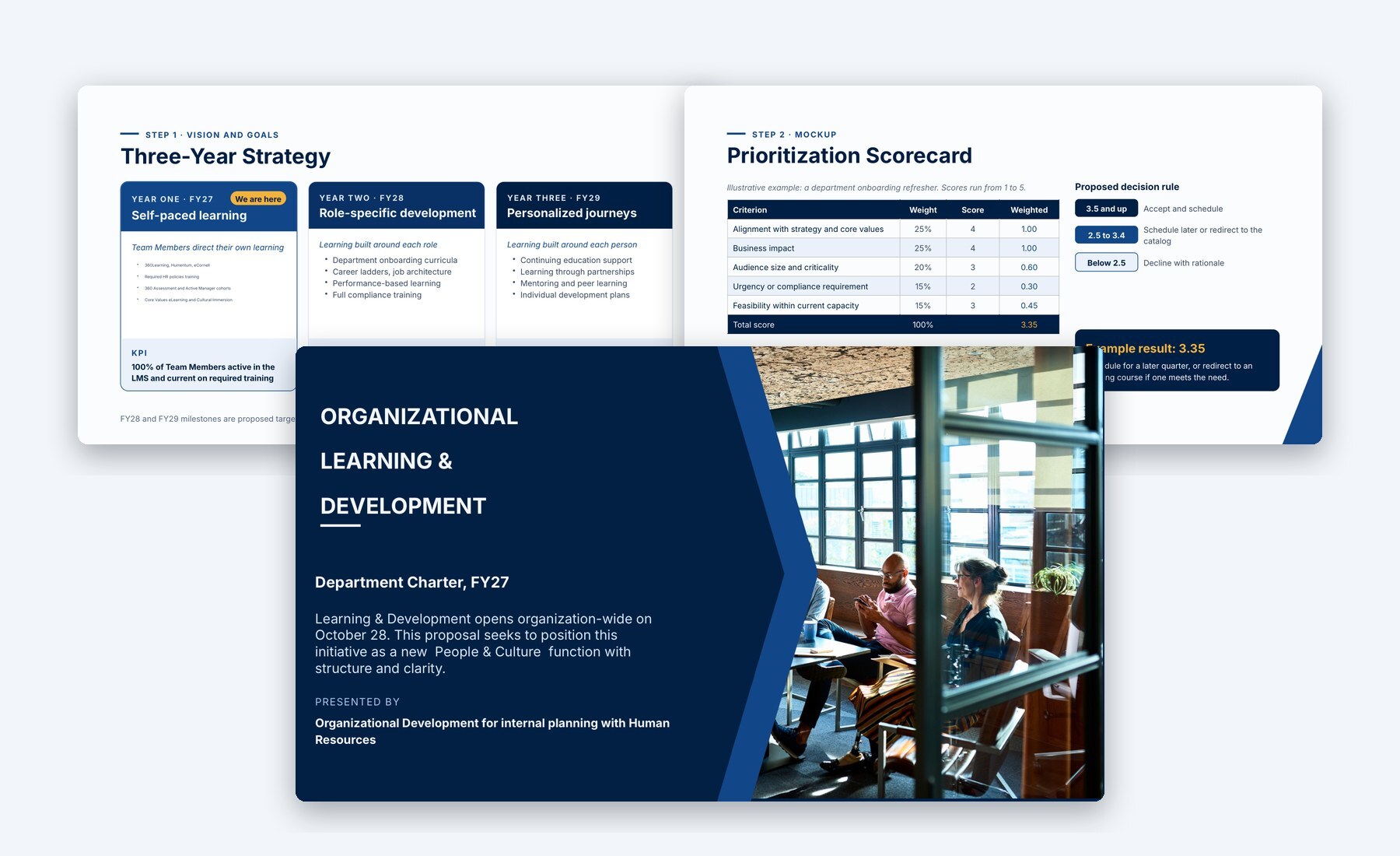
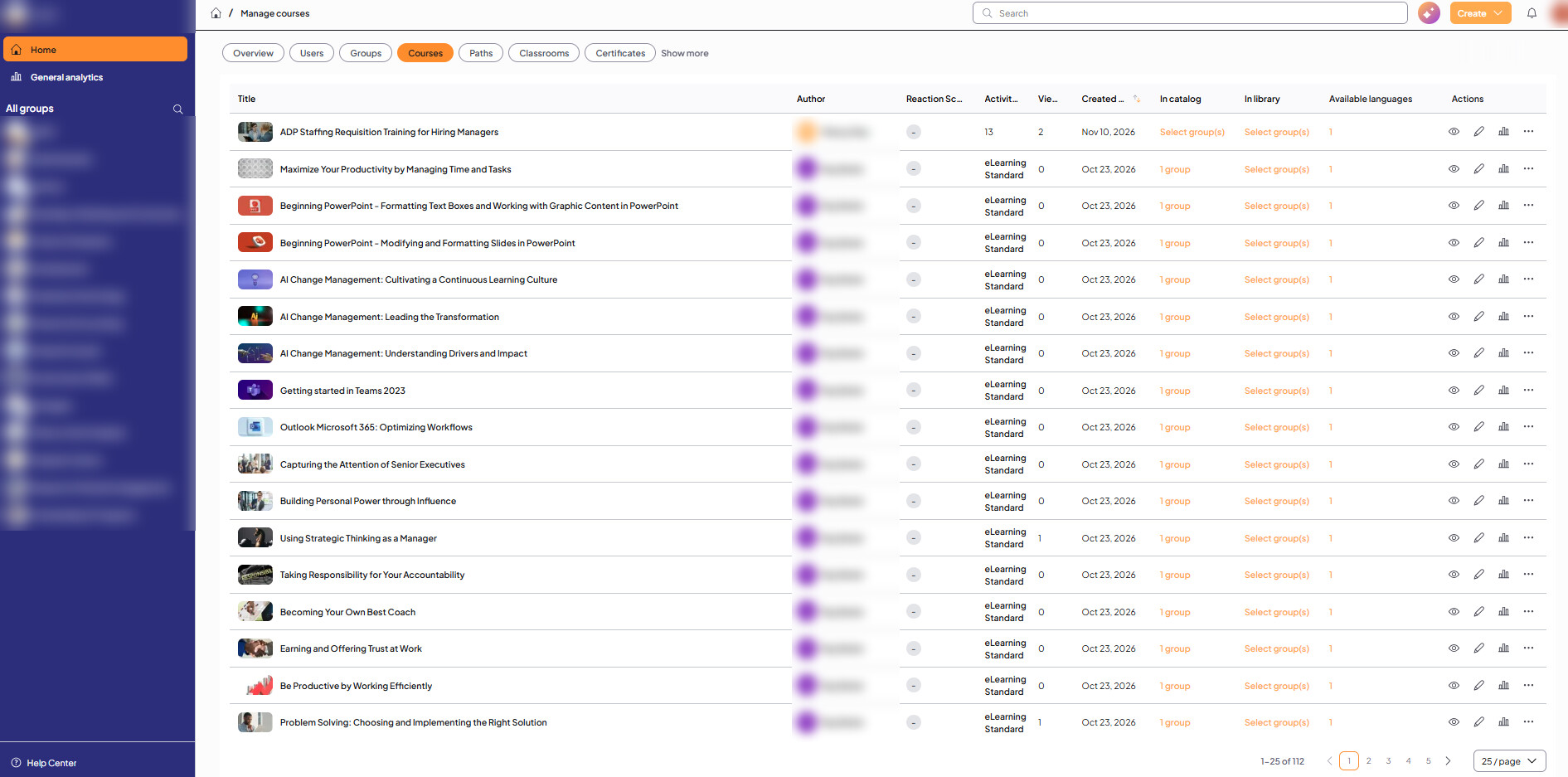
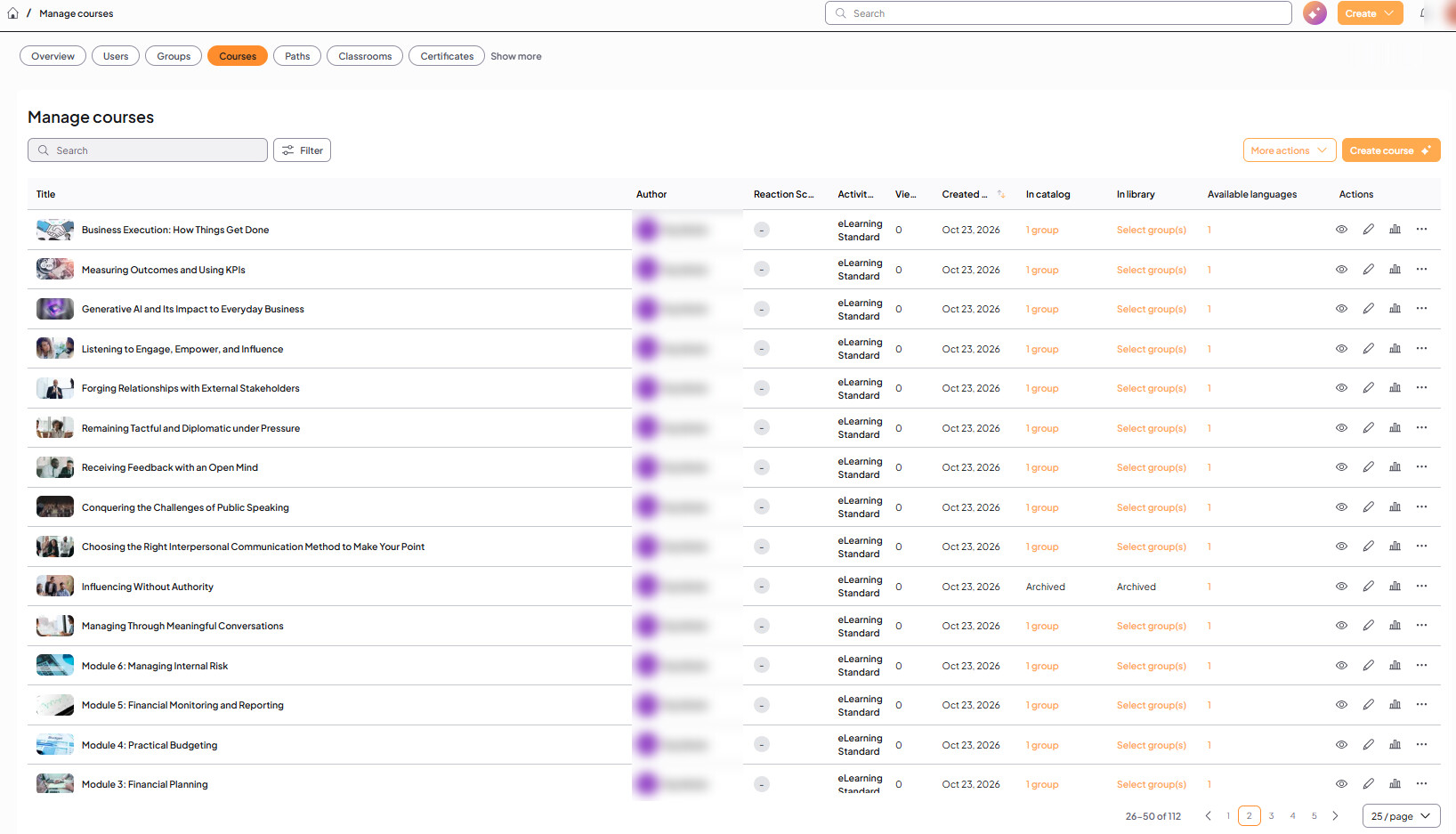
A department charter and business case, governance, a training request process, and an LMS rollout, with about 10 courses built for a 150-course catalog.
FRAMEWORK APPLIED
The Capability Portfolio
Sort. A training request process and prioritization scorecard weigh every request by strategic value.
Prove. Four levels of evaluation are built into the charter, from reaction to business results.
Invest. A phased roadmap ties learning investment to the organization's strategic priorities.
THE CHALLENGE
No formal L&D function or learning platform.
Training was requested ad hoc, with no way to prioritize or say no.
No standard way to measure whether learning made a difference.
Required training was hard to track and keep current.
WHAT I BUILT
The L&D department charter and business case
A RACI and governance model for learning
A training request process with a weighted prioritization scorecard
A four-level evaluation model and FY27 roadmap
The 360Learning launch FAQ and communications
About 10 courses in a 150-course catalog
OUTCOMES
LMS launched in November 2026 for every team member
About 10 courses built for the launch catalog
Every training request now scored on strategy, impact, audience, and urgency
FY27 targets set: 100% LMS activation and 100% current on required training
←BACK TO ALL CASE STUDIES
CASE STUDY 4 OF 6 · NATIONAL NONPROFIT · 2025
Onboarding framework
A departmental onboarding model with a liaison role that absorbs logistics from managers, a manager certification path, and a suite of manager-facing tools.
FRAMEWORK APPLIED
The 15-Point Program Audit
Ownership. A liaison in every department owns onboarding after HR's handoff.
Manager involvement. Checklists and a certification path make each manager's part explicit.
Measurement. Phase 2 analyzed onboarding and offboarding survey data to target the next improvements.
THE CHALLENGE
Onboarding largely ended after Day 1 orientation.
Managers carried the logistics: equipment, access, and scheduling.
New hire experiences varied widely by department.
No data on how new hires actually experienced the process.
WHAT I BUILT
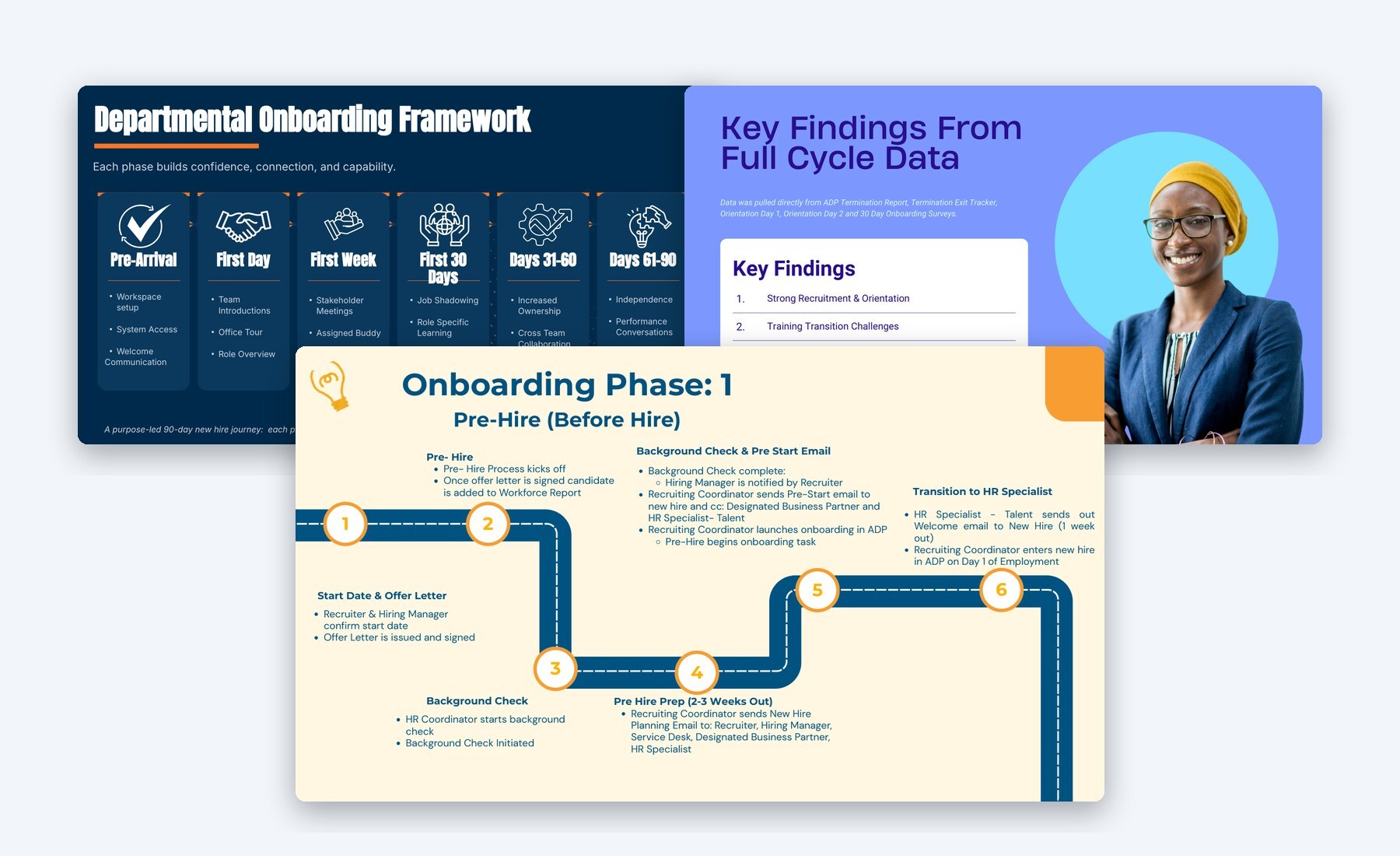
An onboarding process roadmap from pre-hire through 90 days
A new hire checklist for managers
A departmental onboarding playbook
A liaison role and certification training
The new hire orientation
A Phase 2 analysis of new hire survey data
OUTCOMES
100+ new hires moved through the redesigned program
100% satisfaction with Day 1 orientation
100% of new hires meet with their supervisor at least weekly
100% say they understand the company's culture and values
WORK SAMPLES
Onboarding Process Roadmap
Departmental Onboarding Playbook
Onboarding Reimagined: Phase 2 Analysis
New Hire Onboarding Manager Checklist
Onboarding Liaison Certification
New Hire Orientation (excerpt)
←BACK TO ALL CASE STUDIES
CASE STUDY 5 OF 6 · NATIONAL NONPROFIT · 2025
Early career program
A formalized internship program: structure, manager training curriculum, hosting approval process, and onboarding, plus the events that close it out.
FRAMEWORK APPLIED
The 15-Point Program Audit
Design. Structure and hosting approval set before interns arrive, not after.
Manager involvement. A manager training curriculum and toolkit for every host.
Sustainability. Repeatable toolkits, an evaluation, and close-out events the program can run every cohort.
THE CHALLENGE
Internships were hosted informally and inconsistently.
Managers didn't have a shared understanding of how the program worked.
There were open compliance questions around paid and unpaid interns.
No standard way to onboard, evaluate, or close out an intern.
WHAT I BUILT
A hosting approval process for managers
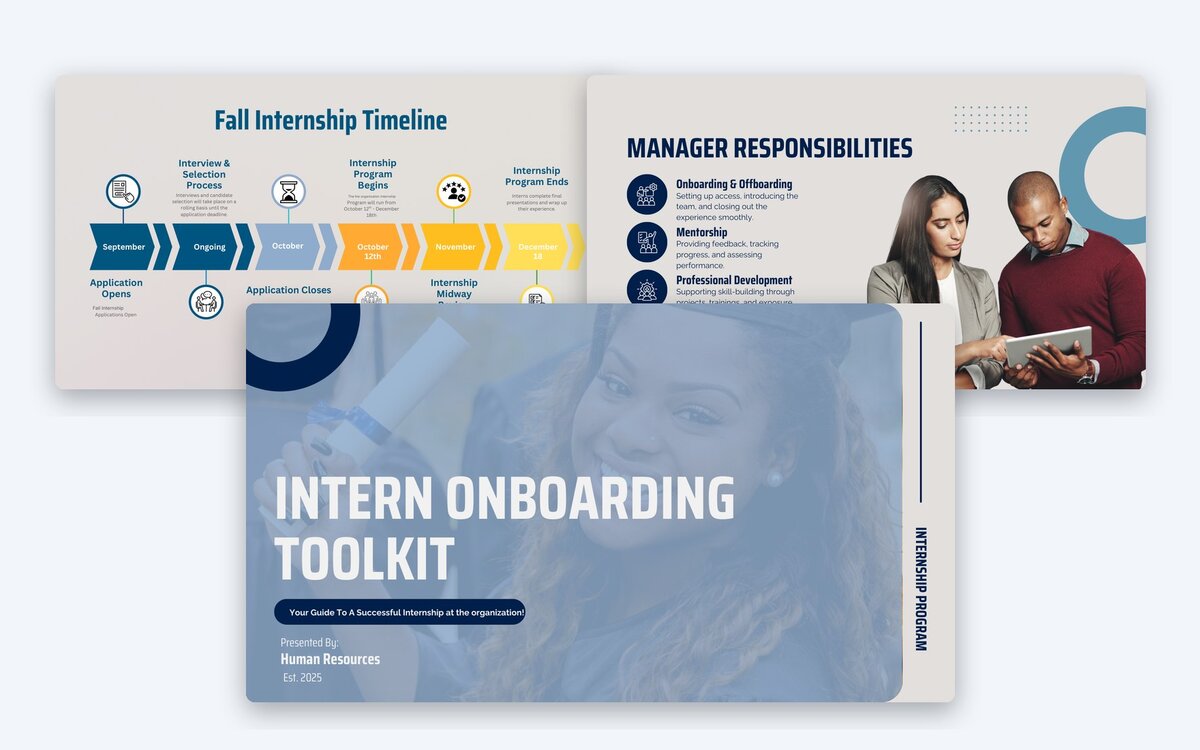
Toolkits for interns and host managers
A manager training curriculum, co-delivered for each cohort
An internship media kit and intern performance evaluation
A networking panel, closing ceremony, and close-out sessions
OUTCOMES
The organization's 1st formalized internship program
Hosting approval required before any intern is placed
Manager training delivered for the Fall 2026 cohort
60+ interns hosted and 12 departments participating
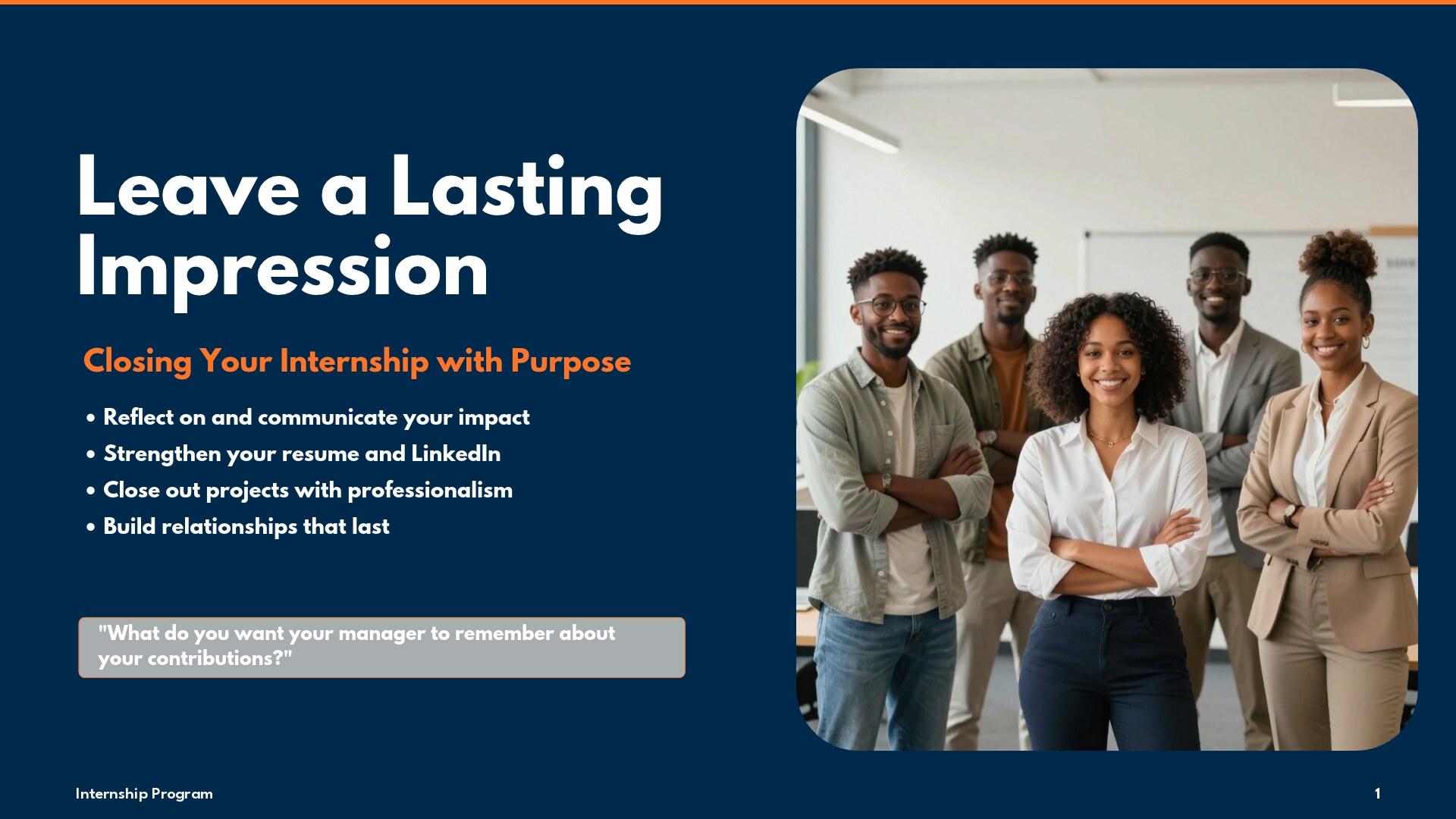
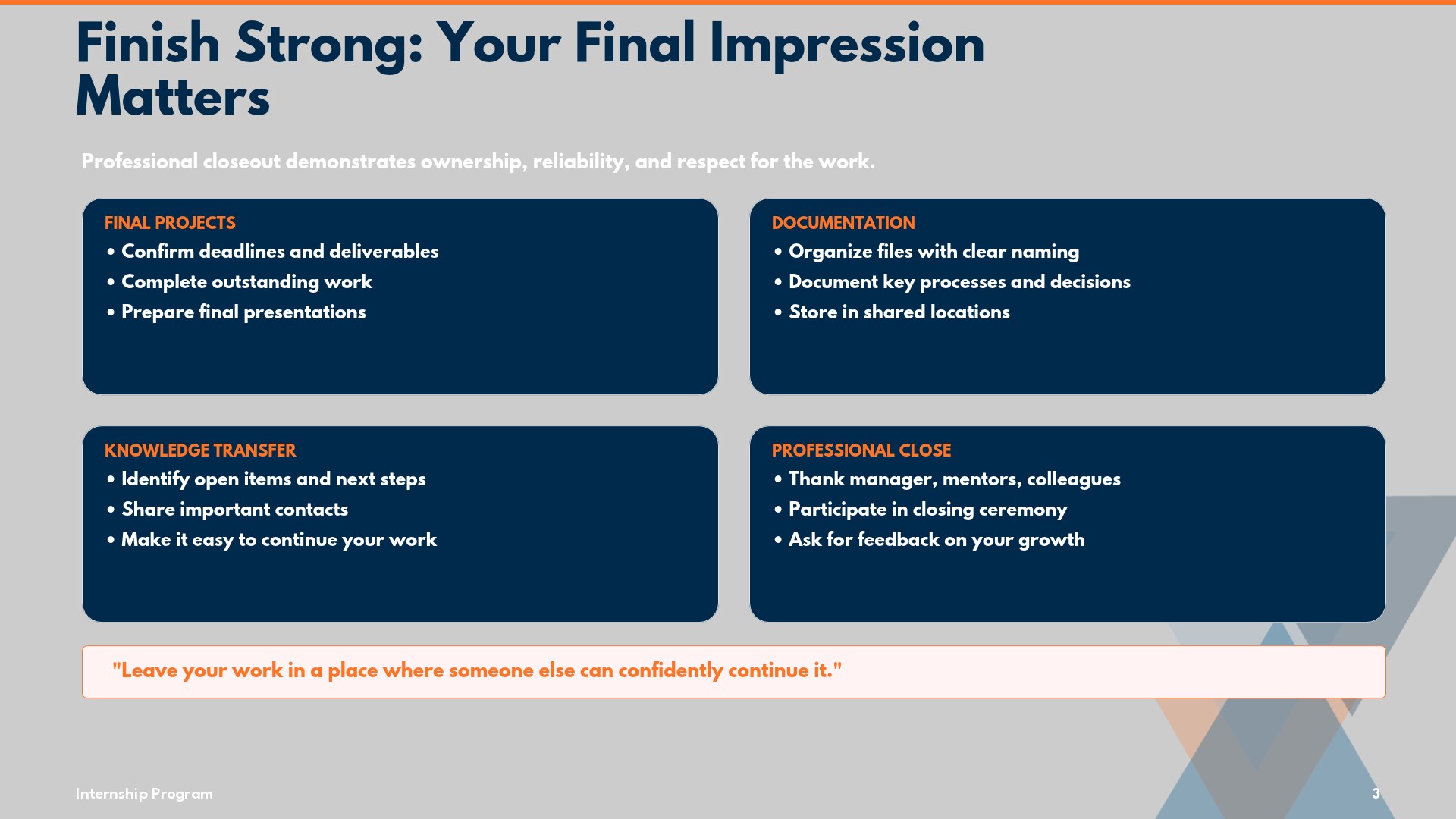
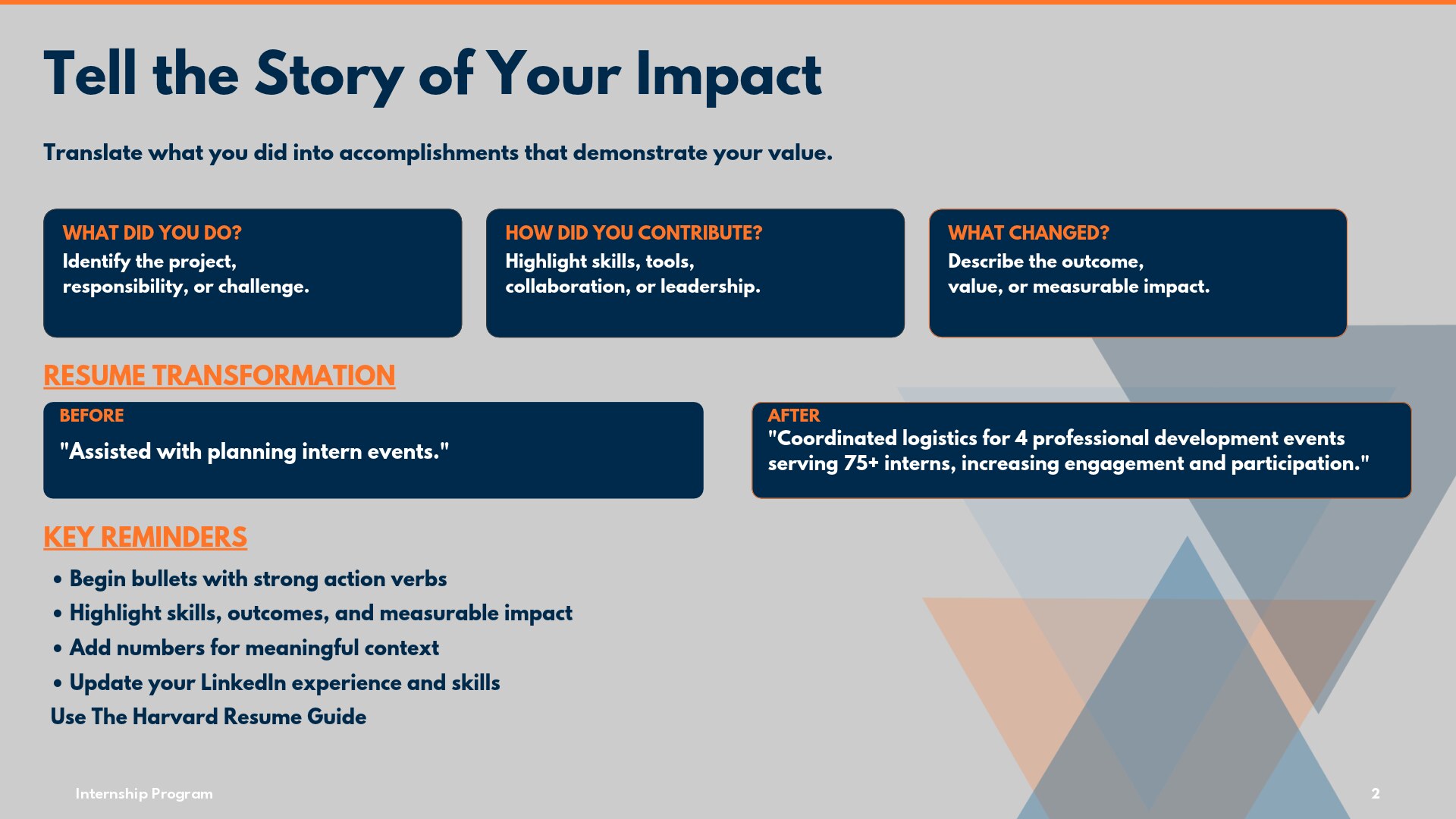
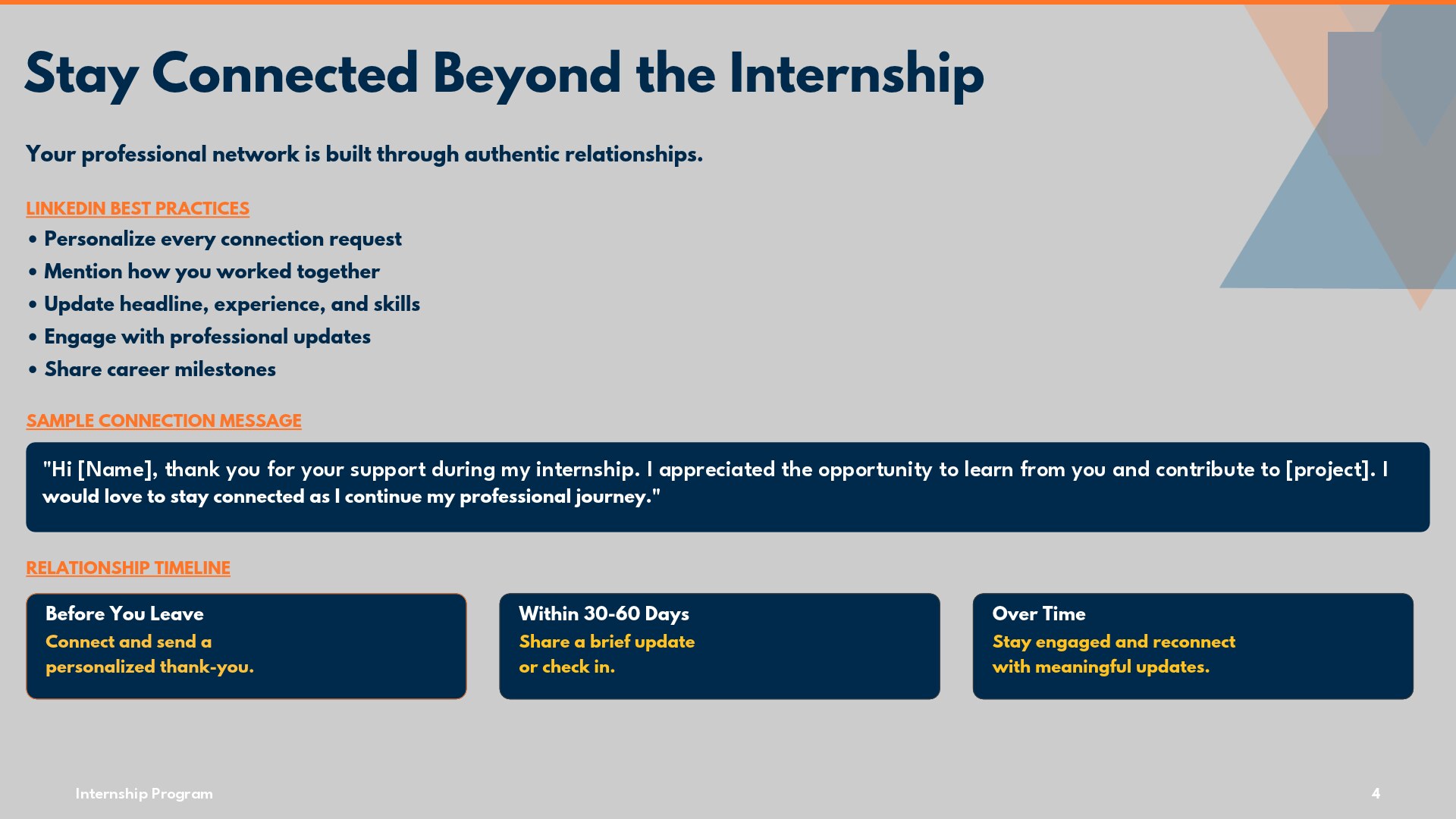
CLOSE-OUT SESSIONS FOR THE INTERN COHORT.
WORK SAMPLES
Internship Media Kit
Internship Manager Toolkit
Networking with Purpose Panel
Intern Orientation (excerpt)
Intern Onboarding Toolkit
Internship Performance Evaluation
Internship Closing Ceremony
←BACK TO ALL CASE STUDIES
CASE STUDY 6 OF 6 · NATIONAL NONPROFIT · 2025–PRESENT
Team Member Hub
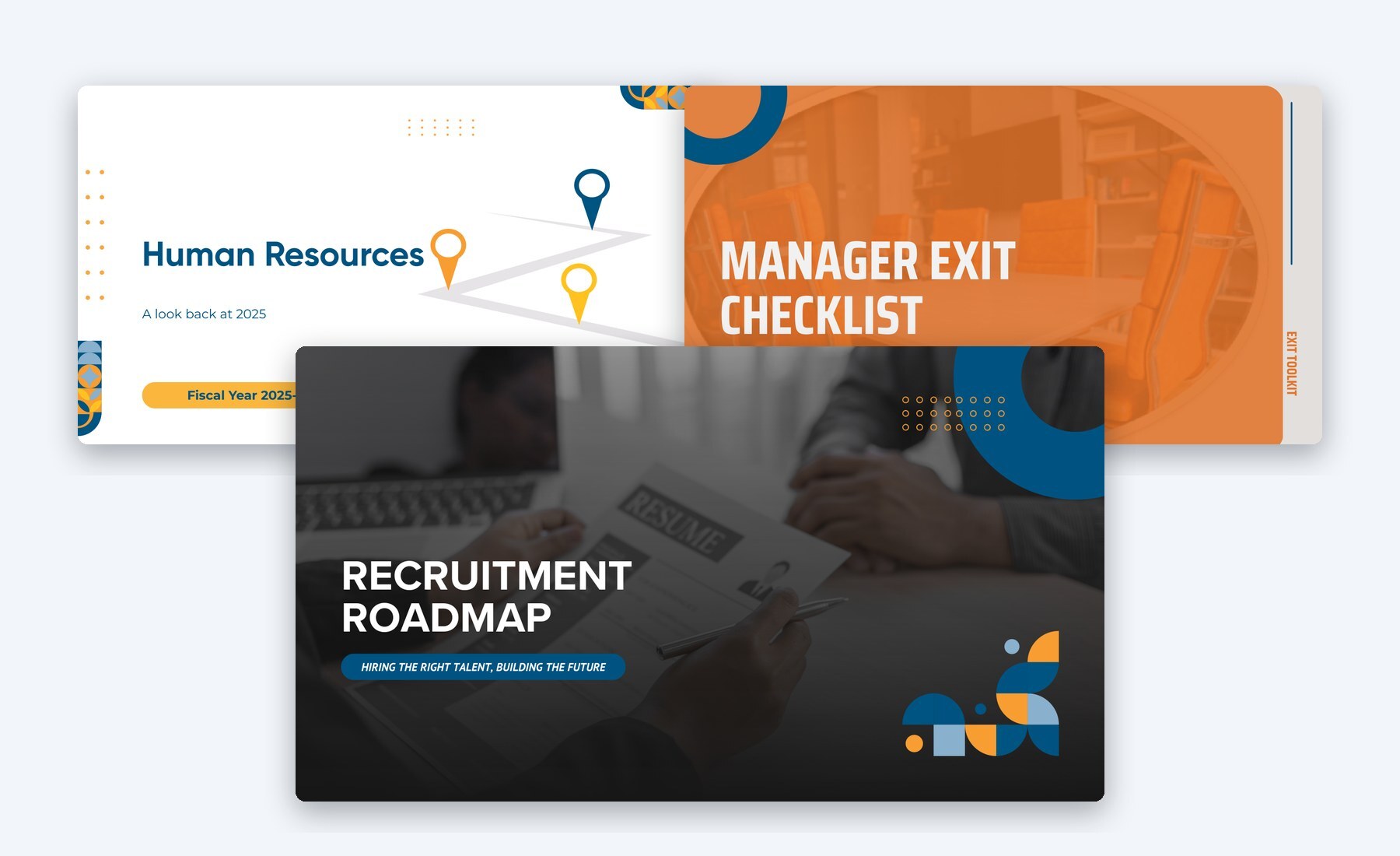
A centralized resource for every team member, from staff to senior leadership, bringing recruitment, new hire, performance management, and internship resources and tracking dashboards into one place.
FRAMEWORK APPLIED
The 15-Point Program Audit
Design. Resources organized around the moments that matter: hiring, joining, performing, leaving.
Measurement. Tracking dashboards show what is used and where people get stuck.
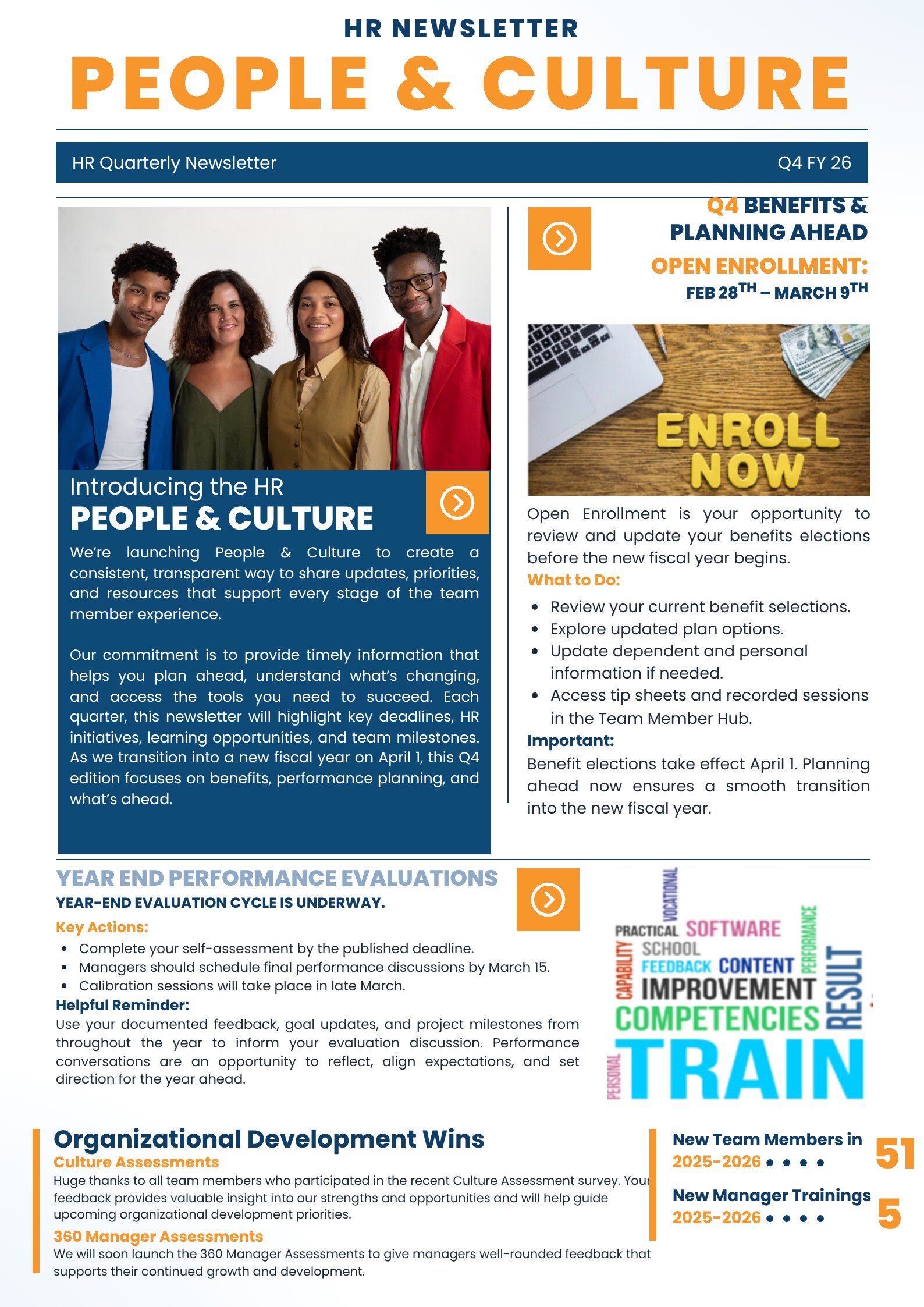
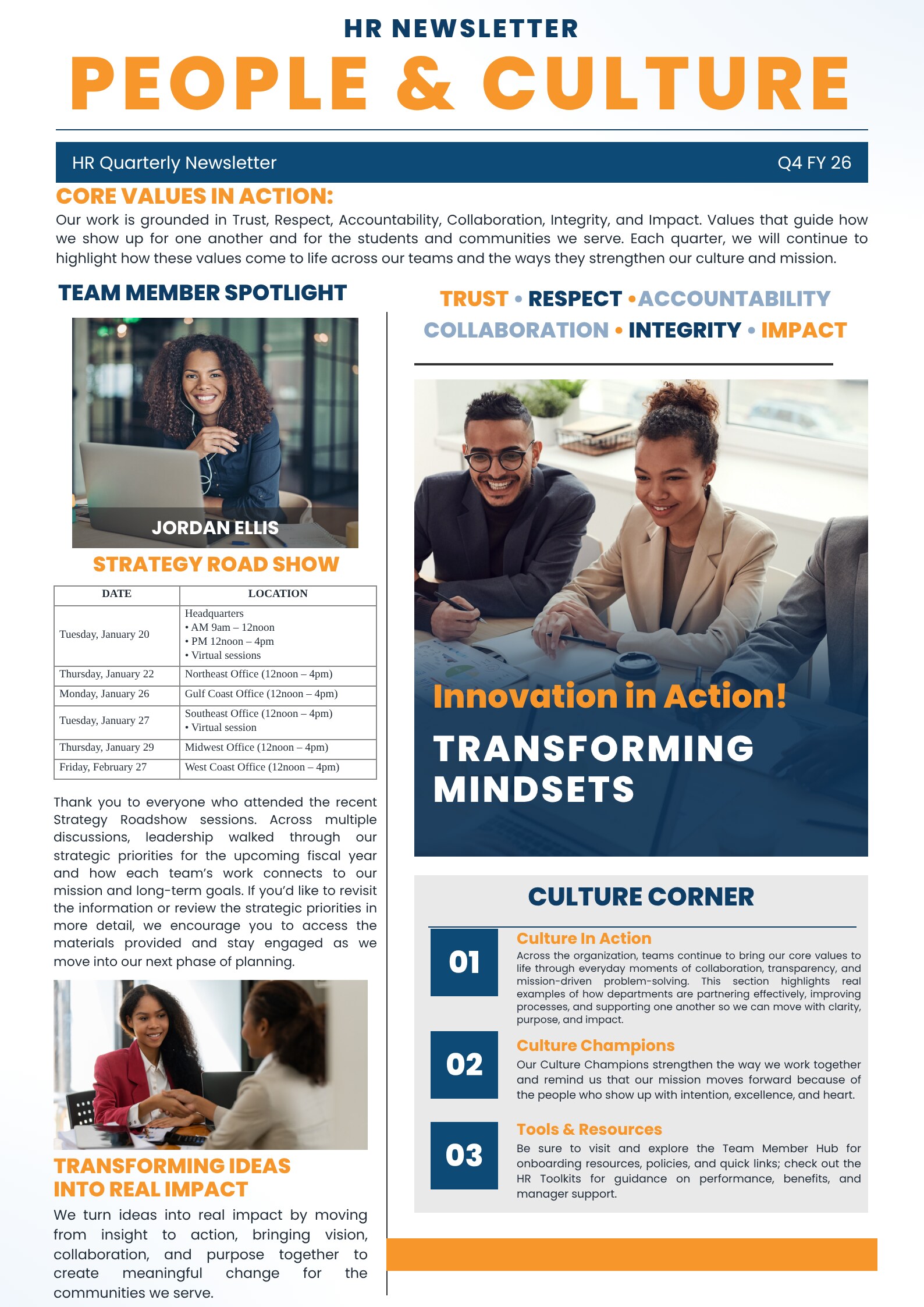
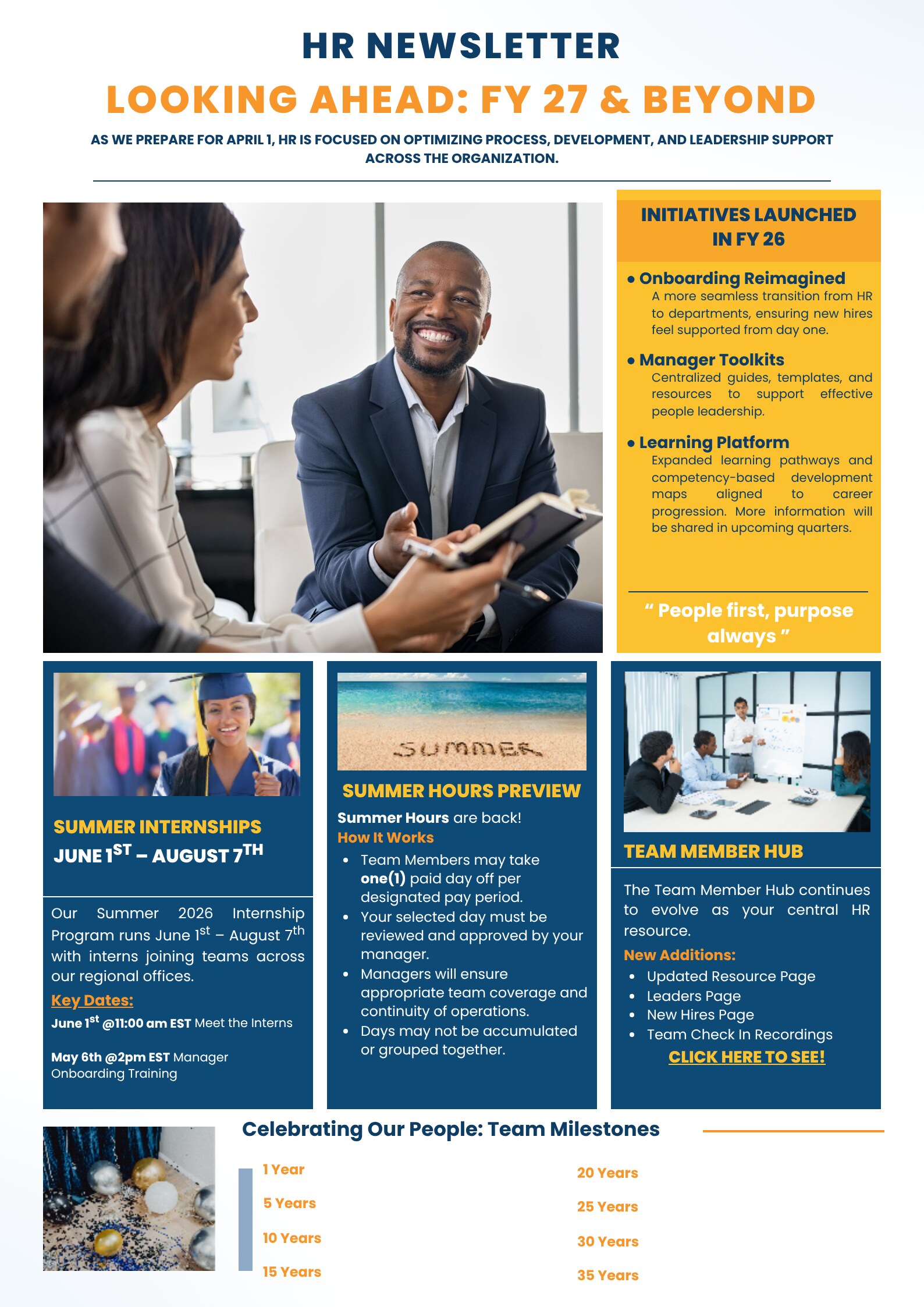
Sustainability. A quarterly newsletter and event campaigns keep the hub current and visible.
THE CHALLENGE
HR resources were scattered across email, drives, and separate guides.
Managers weren't sure where to find hiring, onboarding, or performance tools.
HR fielded the same support questions over and over.
Leadership needed a better way to share team member news.
WHAT I BUILT
The Team Member Hub, organized by hiring, joining, performing, and leaving
A recruitment roadmap and hiring manager quick start checklist
A manager offboarding checklist and compliance training
New Team Member Highlights to introduce new hires
A quarterly HR newsletter and event campaigns
OUTCOMES
50% fewer HR support inquiries after the Hub launched
52+ roles filled with 100% positive candidate experience
100% of departments engaged with HR initiatives
One home for recruitment, new hire, performance, and internship resources
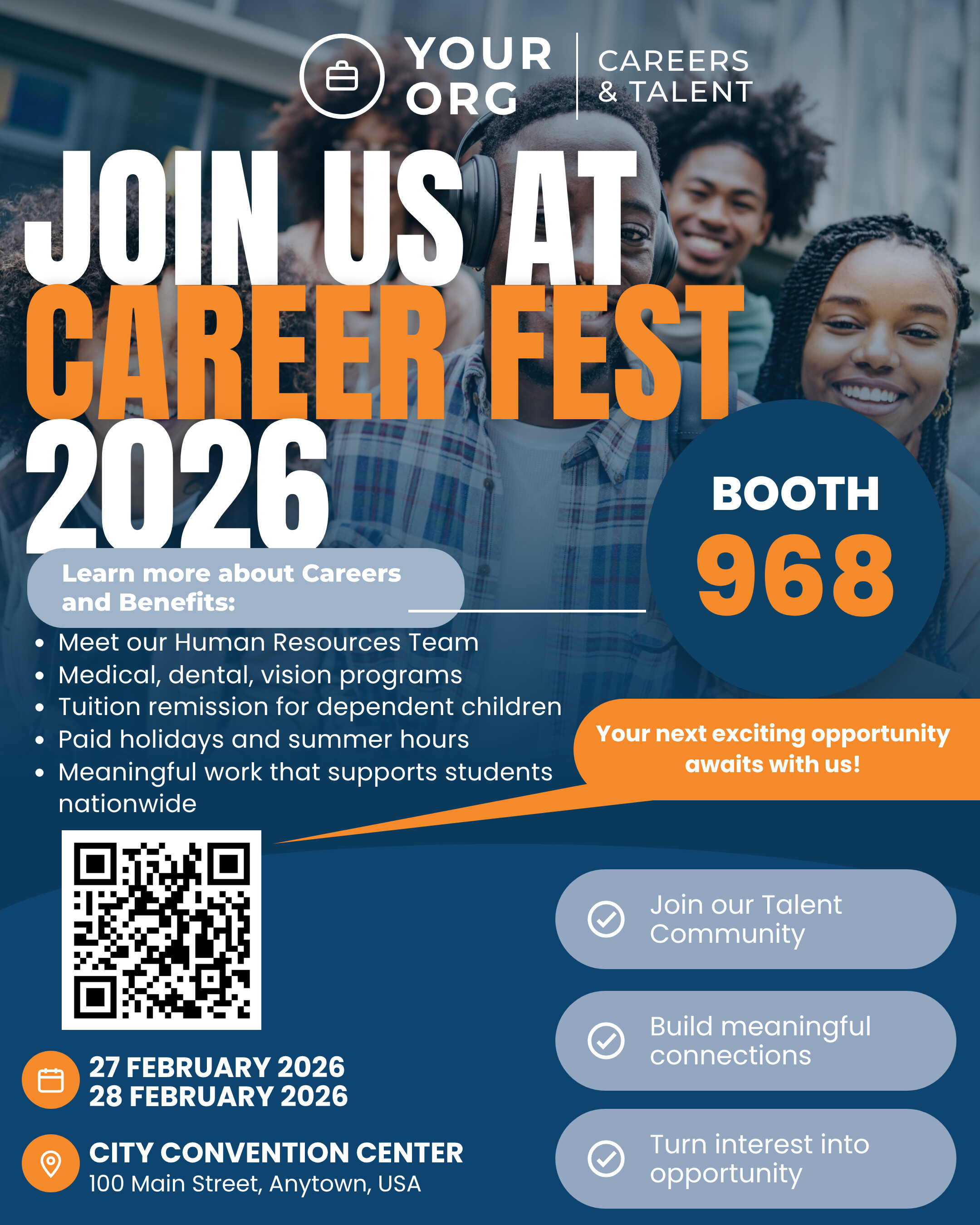
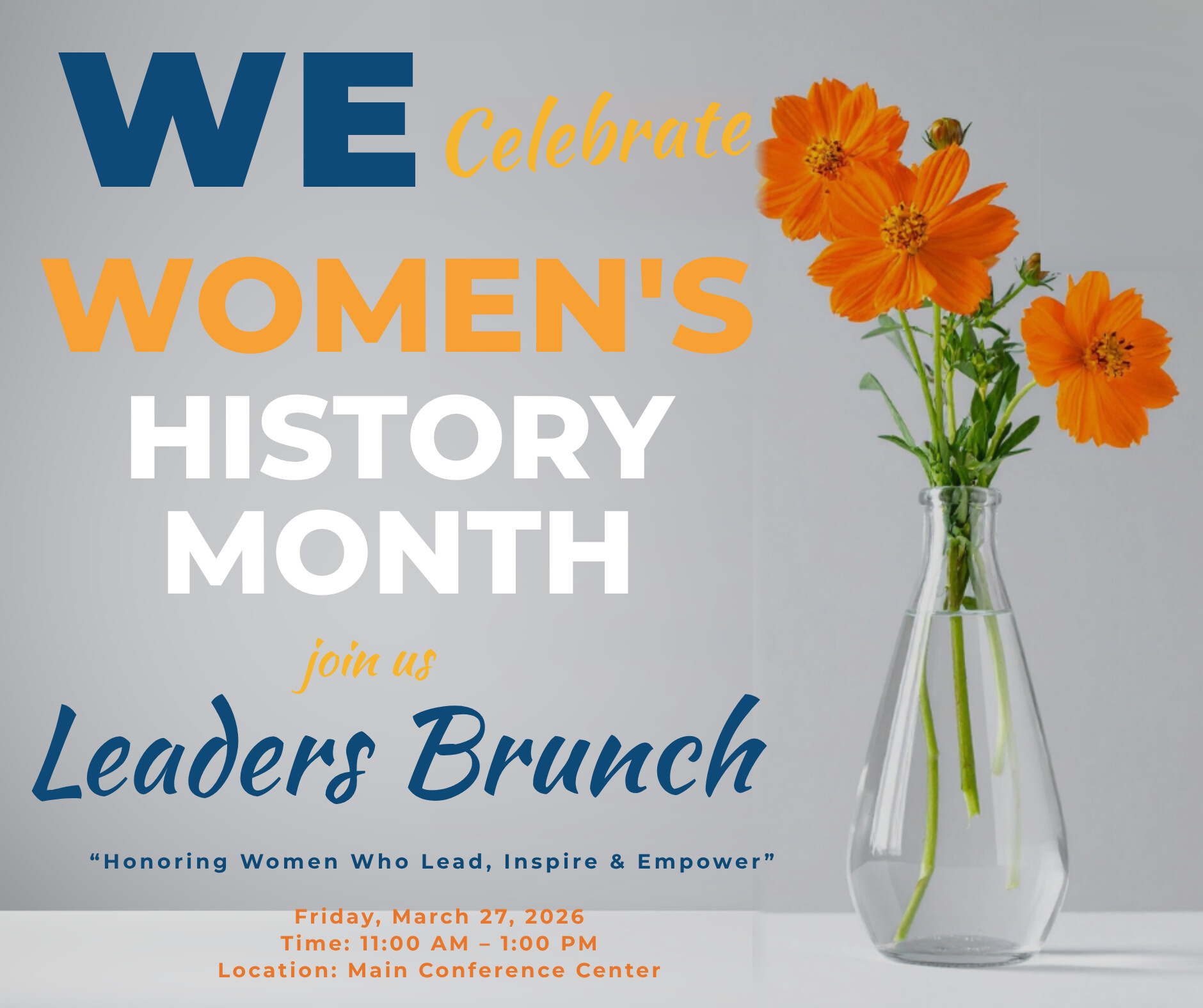
THE NEWSLETTER AND EVENT CAMPAIGNS THAT KEEP THE HUB ALIVE.

WORK SAMPLES
Recruitment Roadmap
VIEW PDF →
Compliance Training
VIEW PDF →
HR Year In Review
VIEW PDF →
Intern Orientation (excerpt)
VIEW PDF →
Manager Offboarding Checklist
VIEW PDF →
Talent Management Overview
VIEW PDF →
HR Quarterly Newsletter
VIEW PDF →
Working on something like this?
Speaking, partnership, advisory, or a system you are trying to stand up.